
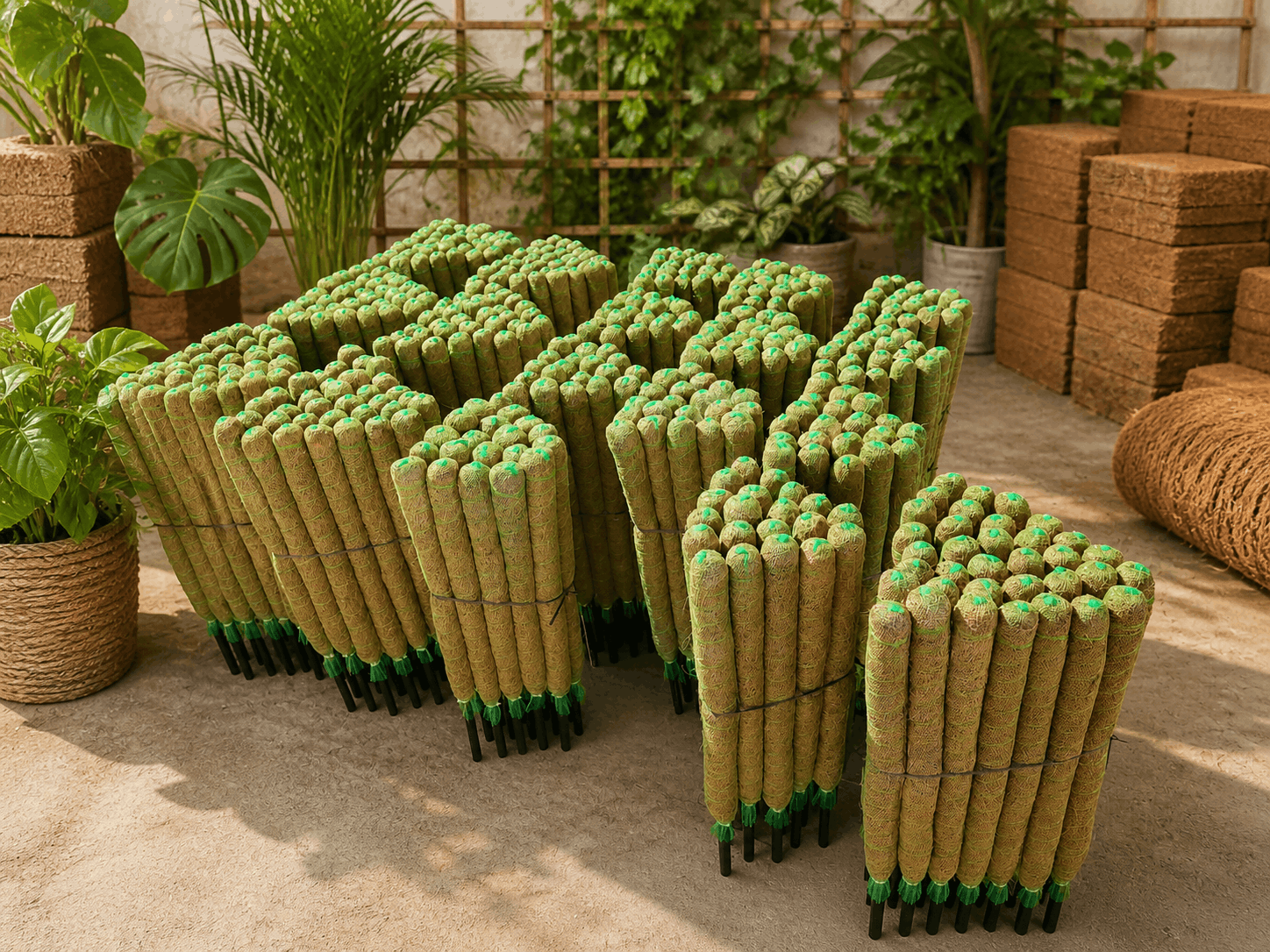

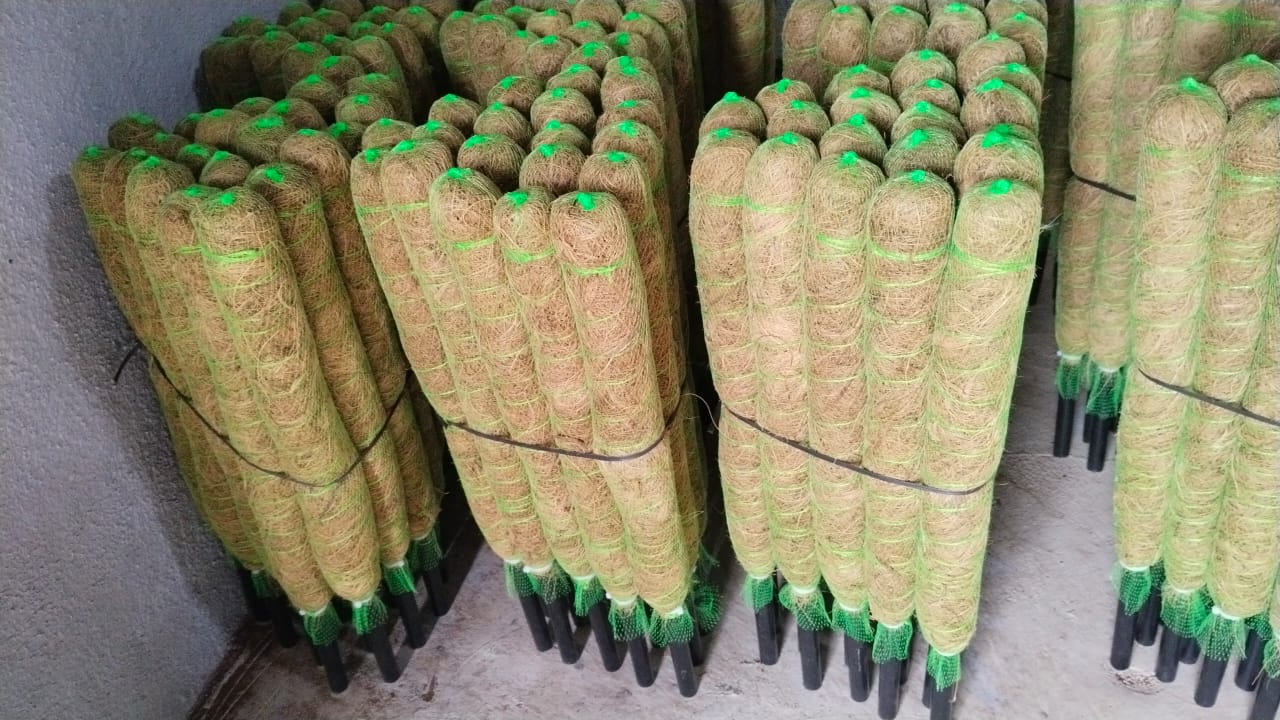
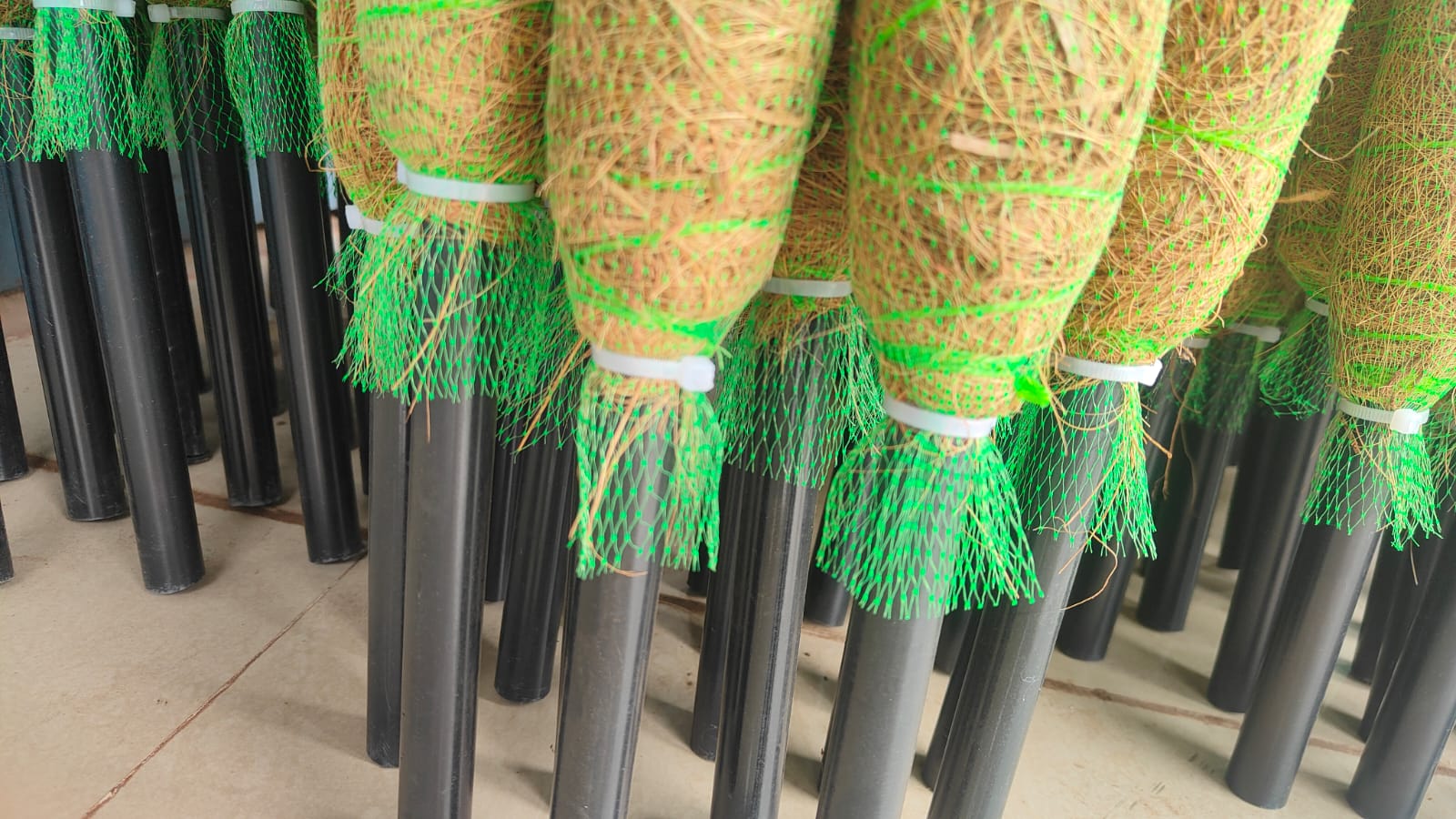
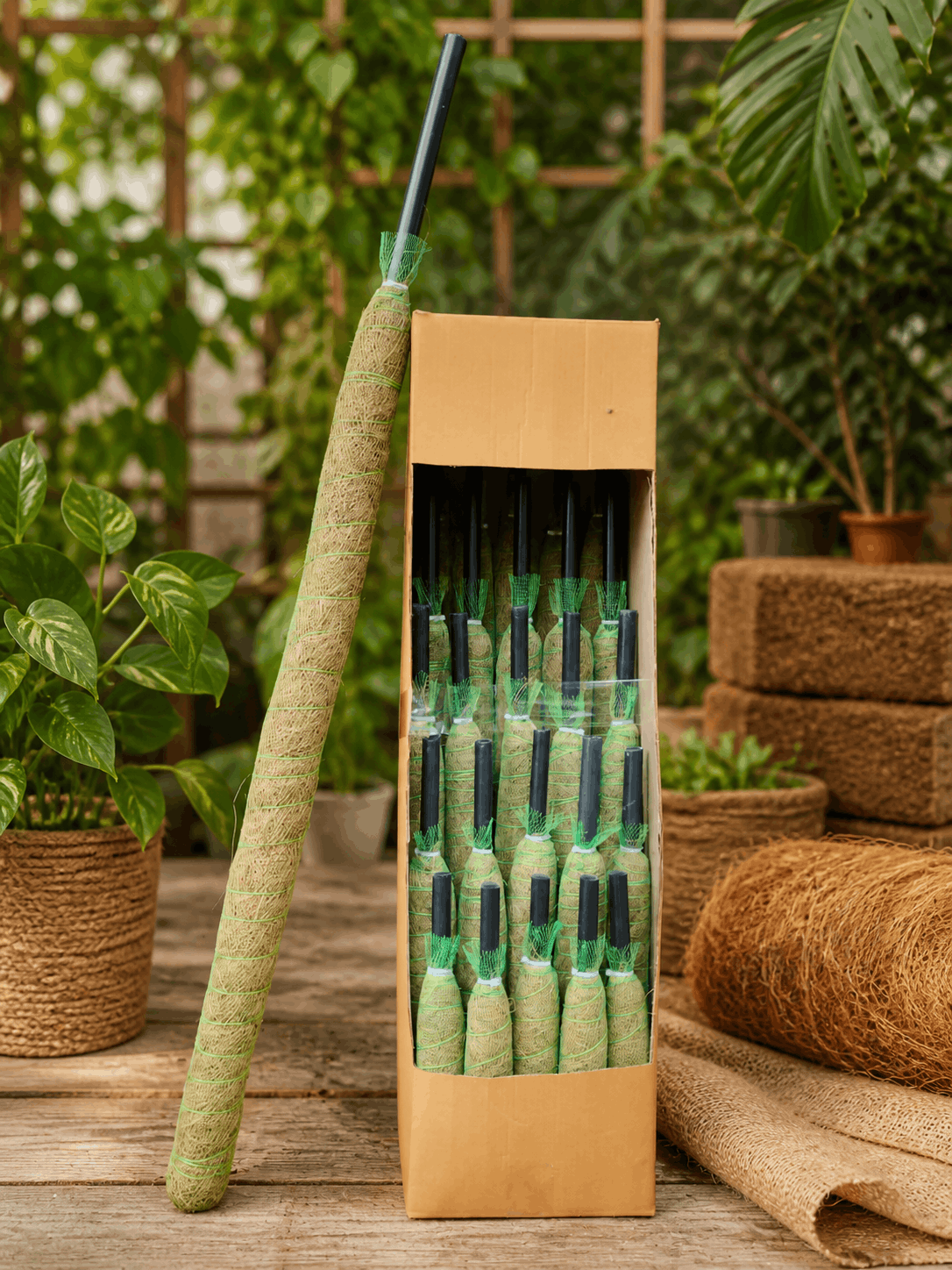
Made from Natural Coconut Coir Fibre
Manufactured using natural coconut coir fibre, our coir poles provide an eco-friendly plant support solution suitable for a wide range of indoor and outdoor climbing plants.
Provides Strong Support for Climbing Plants
The fibrous surface allows aerial roots to attach naturally, helping climbing plants grow upright while maintaining healthy growth.
Available in Multiple Sizes
Coir poles are available in sizes from 1 ft to 5 ft, making them suitable for small indoor plants as well as larger nursery and landscaping requirements.
Suitable for Indoor and Outdoor Gardening
Designed for use in homes, balconies, nurseries, garden centres, commercial landscapes and other gardening applications.
Wholesale Supply Across India
We supply coir poles in bulk to nurseries, garden centres, landscapers, distributors and commercial buyers with competitive wholesale pricing.
Plant Nurseries
Suitable for supporting climbing plants grown and sold by commercial nurseries.
Garden Centres
An ideal plant support solution for garden centres offering climbing plants and indoor plants.
Indoor Plant Collections
Provides reliable support for popular climbing plants such as money plants, pothos, philodendrons and monsteras.
Landscaping Projects
Suitable for landscaping projects where vertical plant growth and healthy climbing support are required.
Vertical Gardening
Helps create organized vertical gardens by providing natural support for climbing and trailing plants.
-
Wholesale Supply: We supply coir poles in bulk to nurseries, garden centres, landscapers, distributors and commercial buyers across India.
-
Available Sizes: Standard sizes are available from 1 ft to 5 ft. Other requirements can be discussed based on order quantity.
-
Bulk Pricing: Pricing depends on pole size, order quantity and current availability. Contact us for a customised wholesale quotation.
-
Packaging: Products are packed appropriately to ensure safe transportation for wholesale and commercial orders.
-
Minimum Order Quantity: MOQ may vary depending on the required size and quantity. Contact our sales team for complete details.